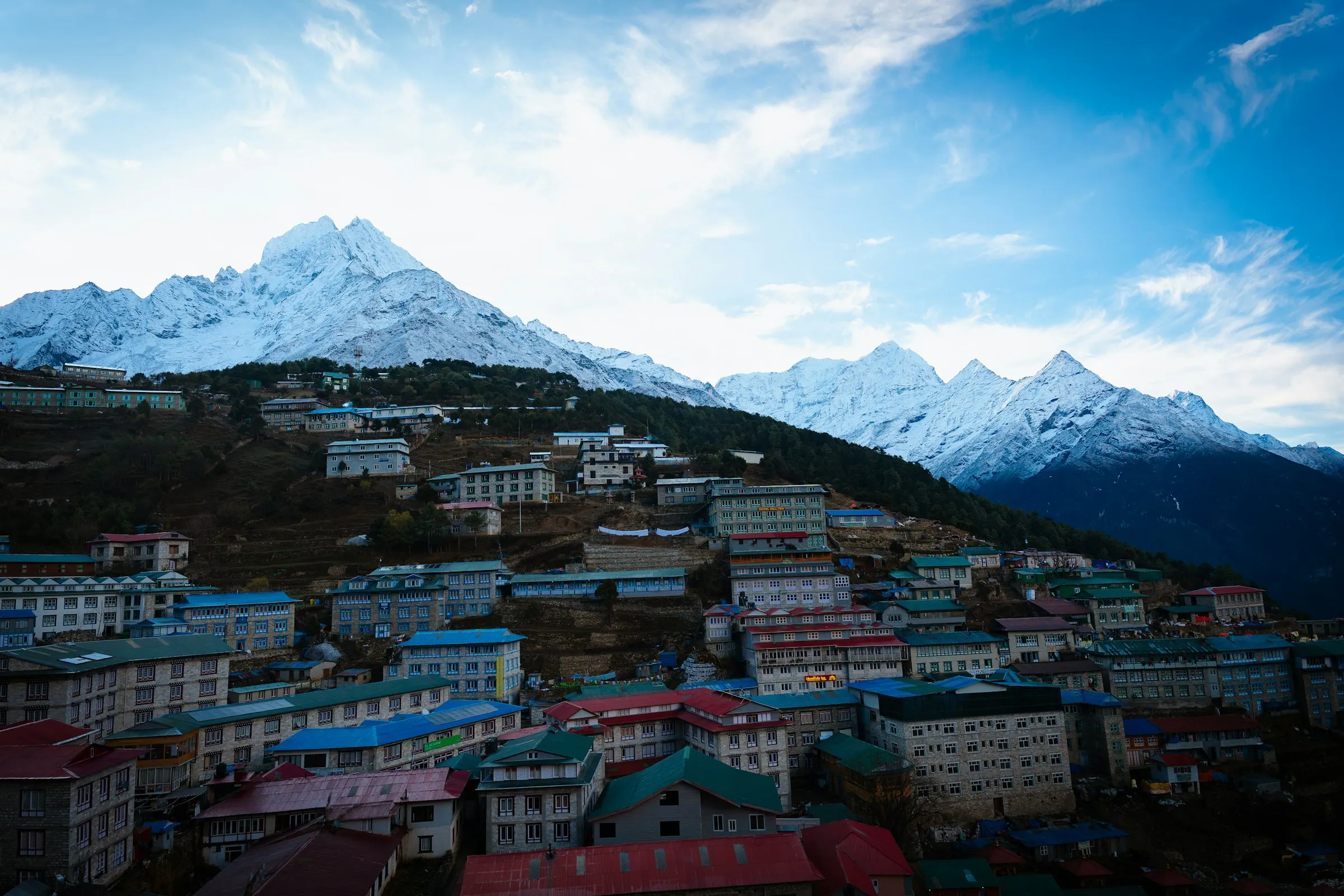
On all of our treks you sleep in teahouses: family-run lodges in the villages along the trail. You don’t carry a tent or cook, which is why these treks are open to anyone fit enough to walk them.
Rooms
Most rooms are simple twins with two narrow beds, foam mattresses and a blanket or two. They’re unheated, so bring a warm sleeping bag. Lower down you may get a private bathroom; higher up, toilets are usually shared and sometimes outside.
The dining room
The heart of every teahouse is the dining room, warmed by a stove in the evening. It’s where you eat, dry your socks, play cards and meet other trekkers. Owners often ask you to eat where you sleep, because they make their living from meals.
Food
Menus are similar everywhere: dal bhat (rice, lentil soup and vegetable curry, usually with free refills), fried rice and noodles, momos, soups, eggs, porridge, pancakes and plenty of tea. Dal bhat is the trekker’s favourite for a reason: it’s filling, fresh and the refills are free. Higher up, the menu gets shorter and prices rise, because everything is carried in by porters or animals.
What you pay for
Your room and meals are usually part of a package. On top, expect to pay for hot showers, phone and battery charging, Wi-Fi, bottled or boiled water, snacks and drinks. Each trek page lists typical prices.
Etiquette
- Ask before taking photos of people or inside homes and monasteries.
- Walk clockwise around stupas and mani walls.
- Bring a water filter or purification tablets instead of buying plastic bottles.